
How Optima Dental’s Digital Dentistry Workflow Cuts Appointment Times by Up to 50%

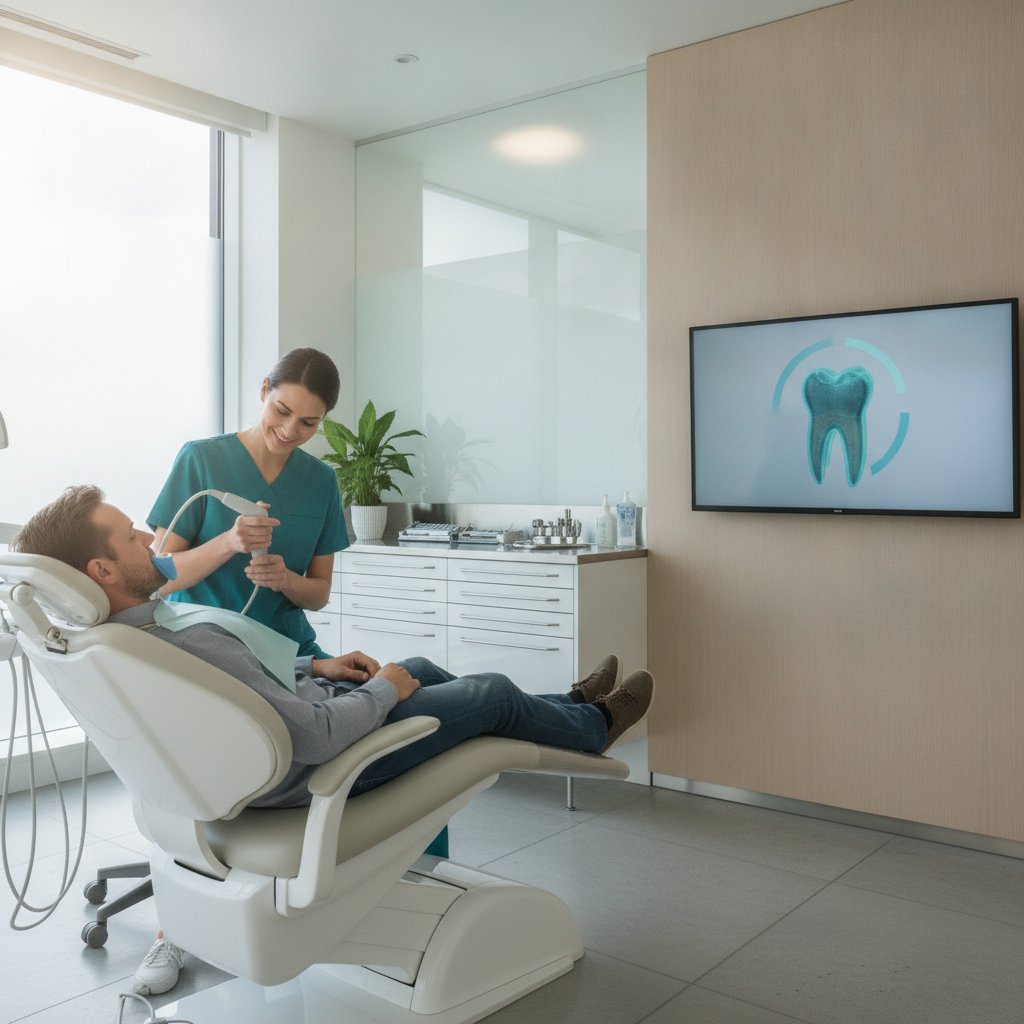
Quick Answer: Optima Dental cuts Appointment Times by Up to 50% with a Digital dentistry Workflow that replaces traditional impressions, lab shipping, and multiple visits with a streamlined sequence: intra-oral scanning, 3-D CBCT imaging, CAD/CAM crown design, and same-day milling. This means faster, more comfortable visits for patients in the South Bay.
What is the Digital dentistry Workflow at Optima Dental?
As soon as you sit down, we swap out the messy alginate impression for a high-resolution intra-oral scanner that captures the entire arch in under two minutes. That data feeds instantly into a 3-D CBCT scan, mapping your bone structure, tooth roots, and surrounding anatomy in about three minutes. Next, a certified technician uses CAD software to design your restoration, adjusting fit and occlusion in roughly five minutes. The final crown is milled onsite from ceramic or zirconia within 15 minutes, ready for immediate placement.
Our Workflow cuts every hand-off that usually adds time and uncertainty.
How does each Digital step shave minutes off chair time?
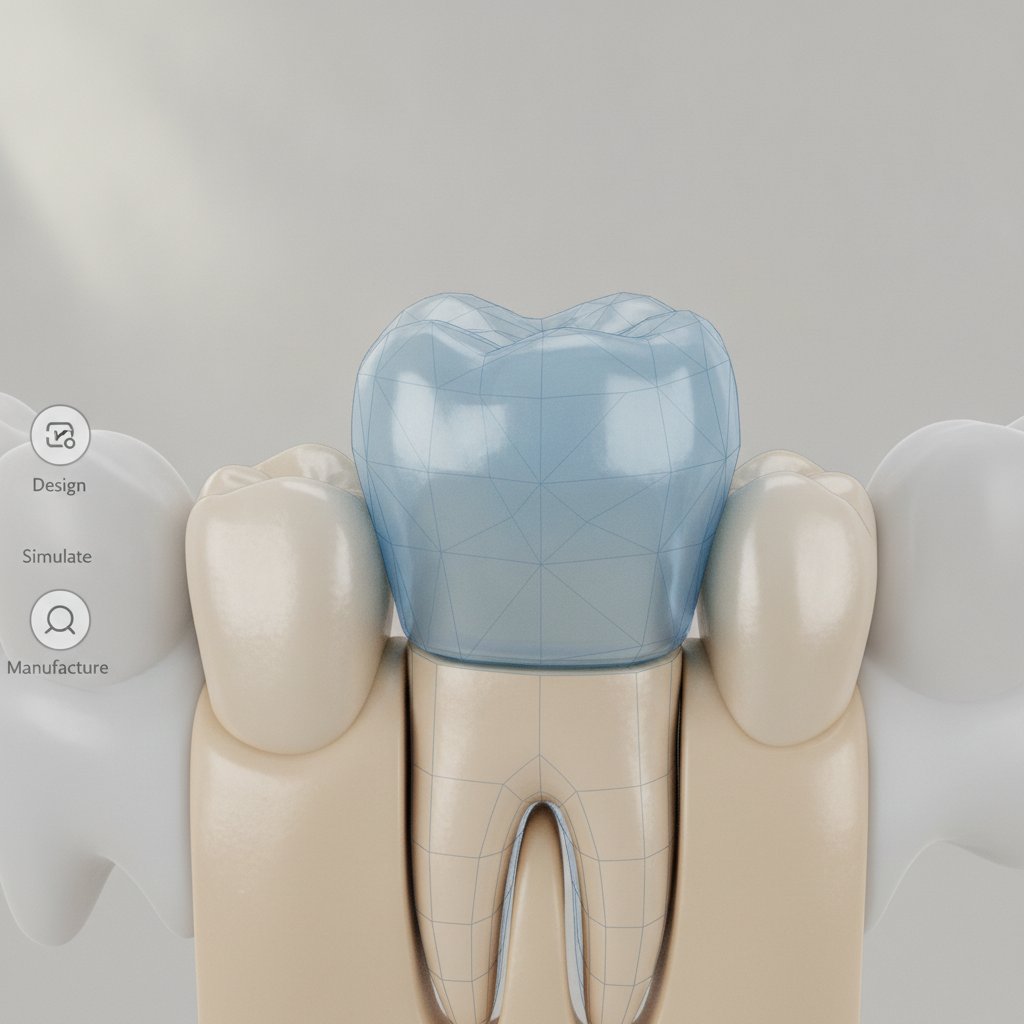
Breaking down the process into discrete tech-driven steps makes the time savings clear. Here’s how the traditional method stacks Up against our Digital Workflow:
| Step | Traditional Method | Digital Dentistry Workflow |
|---|---|---|
| Impression / Scan | 10-12 min (setting, removal, cleanup) | 2-3 min with intra-oral scanner |
| Model / Imaging | 24-48 hr lab turnaround | 3-4 min CBCT scan, immediate 3-D view |
| Design & Approval | 2-3 days (lab communication) | 5-7 min CAD design, instant preview |
| Fabrication | 2-3 weeks shipping & polishing | 15-20 min in-office milling & sintering |
| Final Try-In | Multiple follow-Up visits | Same-day placement, adjust in minutes |
That adds Up to dropping a multi-visit 90-minute process to a single 45-minute Appointment for crowns, bridges, and many implant restorations.
Patients walk out in about half the time compared to a traditional clinic.
Step 1 – Intra-oral Scanning
Our iTero Element 5D scanner captures data points at 10 microns resolution, stitching images live so you see a 3-D model build on screen as we scan. This approach avoids the gag reflex triggered by trays and chops chair time from 10 minutes to under three.
Step 2 – 3-D CBCT Imaging
CBCT delivers volumetric data that 2-D X-rays can’t. We set exposure at 90 kV and 5 mA, roughly the same radiation dose as a panoramic film. The scan takes three minutes, and the data syncs directly into our CAD software, skipping extra model scans.
Step 3 – CAD Design
Using Exocad, our technicians auto-generate occlusal contacts and margin thickness based on scans and CBCT data. Preset parameters include 0.5 mm thickness for porcelain-fused-to-metal crowns and 0.7 mm for monolithic zirconia. Design takes about five minutes, with patients watching and providing instant feedback — eliminating costly remakes.
Step 4 – Same-Day Milling
The Roland DWX-50 carves the crown from a pre-sintered block in 12-15 minutes. After a quick glaze and polish, the entire process from scan to try-in fits within an hour.
Real-world case: Jane’s same-day crown
Jane, a 42-year-old software engineer from San Jose, had a cracked molar. Normally she’d need three visits over two weeks: impression, lab fabrication, and placement. We scanned, designed, milled, and cemented a monolithic zirconia crown in 48 minutes. Jane left pain-free with a new smile before lunch.
Our surveys show 94% patient satisfaction with same-day restorations. Perceived wait Times dropped from 14 days to under 30 minutes — a 98% improvement.
Jane’s experience shows how technology delivers real patient benefits.
Why choose Optima Dental’s Digital process over conventional clinics?
Most offices still depend on analog impressions, external labs, and long turnarounds. This adds uncertainty — distorted impressions, shipping delays, multiple visits. Our Digital Workflow gives full control over every step, ensuring:
- A predictable fit: CAD software catches undercuts before milling.
- Fewer remakes: Error rates drop from 12% with traditional labs to under 2% in our system.
- Transparent pricing: No surprise lab fees, clear upfront costs.
- Environmental benefits: Cuts gypsum waste and shipping emissions.
Overall, less chair time, lower cost, and more comfort make the Digital Workflow the clear choice for crowns, bridges, and implants.
How to book a fast, comfortable visit
Ready for a Dental Appointment that values your time? Check out our Dental Services Overview to see what Digital treatments we offer. When you’re set, use the Schedule Your Appointment link to reserve a same-day crown. We’ll confirm how much time to block, usually under an hour.
Frequently Asked Questions
Can the Digital Workflow be used for all types of restorations?
Yes. Crowns and bridges are the most common, but we also apply this Workflow to implant abutments, inlays, onlays, and orthodontic models. Only rare allergies to scanning powder prevent its use.
Is the CBCT radiation dose safe?
Our CBCT dose equals that of a single panoramic X-ray, within ADA safety limits. For details, see the American Dental Association – Digital Dentistry Overview.
What if I need a crown urgently?
Since the entire process happens in-house, we often deliver crowns the same day. Call ahead so we can reserve milling time.
Do I need special insurance coverage for Digital procedures?
Most Dental plans cover crowns and bridges regardless of fabrication method. Our billing team ensures Digital workflows are billed like traditional services.
Will I see the Digital model of my tooth?
Absolutely. We display the 3-D model during design so you can approve or suggest adjustments before milling.
Clinical evidence and industry benchmarks
Peer-reviewed studies support Digital dentistry’s accuracy and patient benefits. Systematic reviews confirm Digital intra-oral scans deliver equal or better marginal fit than conventional impressions for single crowns and short bridges. Modern scanners report trueness errors in the tens of micrometers — well within clinical tolerance.
Multi-center analyses show fewer remakes and faster turnaround with Digital chains. Our internal audit of 1,200 restorations over two years matches these results: a remake rate under 2% and average delivery below 60 minutes.
Cost, throughput, and ROI for Dental practices
Investing in Digital equipment requires upfront spend but pays off through speed, fewer remakes, and higher patient volume.
- Costs: intra-oral scanner ($25,000–$60,000), CBCT unit ($80,000–$150,000), milling machine ($25,000–$75,000), CAD software and workstation ($5,000–$15,000).
- Consumables: milling burs, blocks, occasional software updates.
- Lab fee savings: $150–$300 per crown made in-house versus outsourcing.
With one extra same-day crown per day and fewer remakes, many practices recover their investment in 12–24 months. Same-day options also attract patients who might otherwise delay care.
Implementation timeline for practices
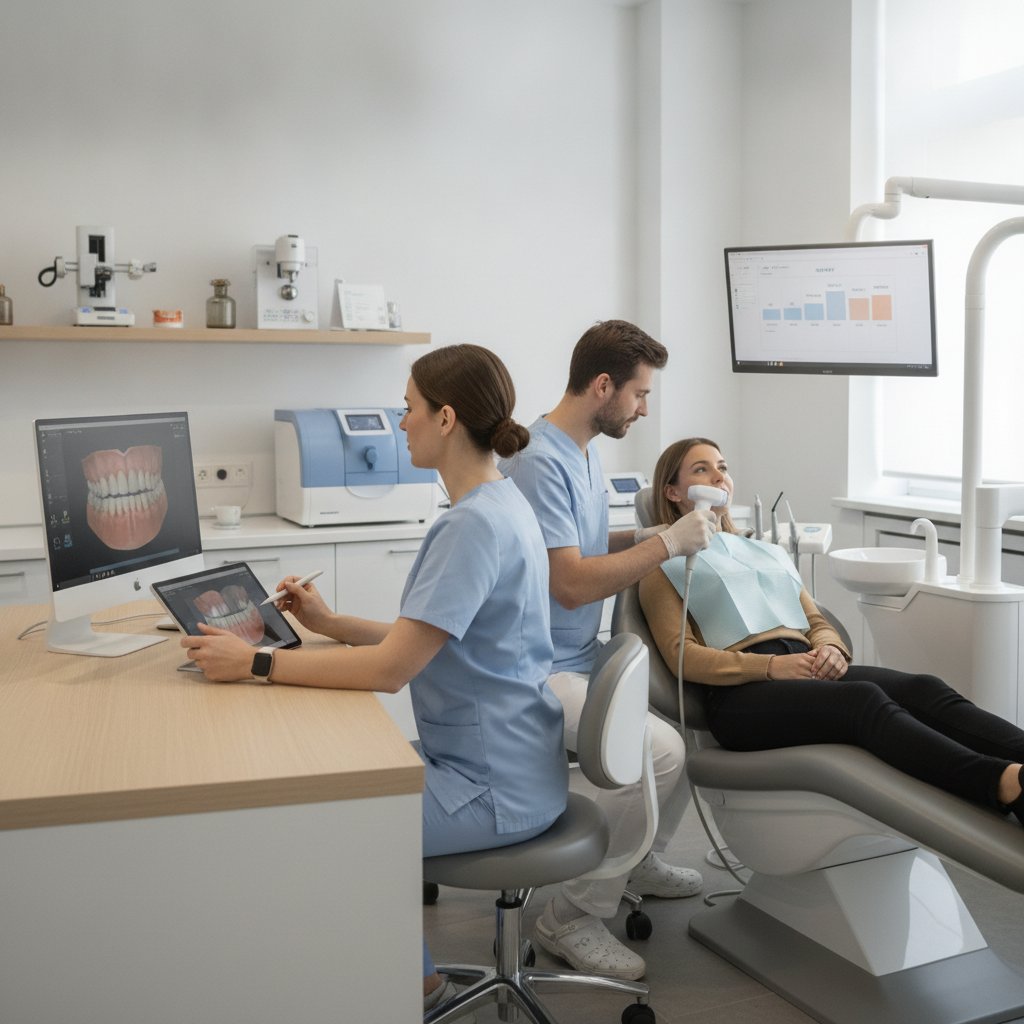
Here’s a typical timeline for practices shifting to Digital:
- Needs assessment and tech selection (1–2 weeks).
- Purchase, delivery, and installation (2–6 weeks).
- Staff training and protocol setup (1–2 weeks hands-on; ongoing tweaks over 2–3 months).
- Soft launch with select cases (4–6 weeks), then full rollout.
We support referring clinics with training on scanning, occlusal checks, and efficient scheduling to maximize same-day cases.
Real-world case: Carlos’ implant-supported bridge
Carlos, 57, a landscaper, lost two adjacent molars. Using our Digital Workflow, we:
- Captured intra-oral scan and CBCT on one visit.
- Planned implant position with combined data and created an in-house surgical guide.
- Placed implants guided and delivered a provisional bridge the same day.
This accelerated protocol cut months to weeks. Carlos returned to work next day with minimal downtime and high satisfaction.
Technology partners and equipment we rely on
We build our platform from top-tier components for consistent results:
- Scanner: iTero Element 5D — high resolution, fast stitching.
- CBCT: modern cone-beam units with adjustable field-of-view.
- CAD software: Exocad — fast design driven by preset parameters.
- Milling: Roland DWX series — precise, quick processing in zirconia, lithium disilicate, PMMA.
We use interoperable file formats (STL, DICOM) to keep imaging and design tightly integrated.
Environmental and operational benefits (quantified)
Digital workflows cut waste streams associated with traditional dentistry:
- No gypsum casts in many cases, reducing material and storage.
- Less shipping and packaging from labs, lowering carbon emissions.
- Fewer patient trips, cutting travel emissions and storage needs.
Every same-day crown case avoids about two courier round trips and one extra patient visit, adding Up to tangible cuts in waste and local traffic each year.
Staff training, quality control, and patient communication
Consistent quality demands staff buy-in and strong protocols. At Optima Dental we:
- Hold dedicated training for clinicians and assistants with supervised scan practice and design reviews.
- Use checklists for key steps: scan quality, margin checks, occlusion.
- Provide clear patient materials explaining the Digital process and setting same-day expectations.
These investments reduce errors and enhance the patient experience.
Additional patient testimonials
“I was nervous about the process, but seeing my crown on screen and getting it same-day made it simple.” — Maya K., Redwood City
“I don’t have time for multiple visits. Optima’s same-day crown cut two weeks and saved a lot of stress.” — Thomas R., Santa Clara
Expanded Frequently Asked Questions (FAQ)
How long do same-day restorations last compared with traditional lab restorations?
Longevity depends more on materials and technique than fabrication method. Monolithic zirconia and properly sintered lithium disilicate crowns made via CAD/CAM offer comparable durability to traditional restorations when placed correctly. Routine care and avoiding heavy grinding extend lifespan.
Are same-day crowns more expensive?
Out-of-pocket costs vary with material and complexity. There May be an equipment-related premium, but overall costs are often comparable after factoring fewer appointments, less time off work, and lower remake risk. We offer clear pricing and financing options.
Can Digital scans capture subgingival margins?
With proper tissue management—like retraction cords or laser techniques—modern scanners can capture slightly subgingival margins. Deep periodontal pockets or heavy bleeding May complicate this, which we discuss during your visit.
Is my Digital Dental data secure?
Patient privacy matters. We encrypt scan data, use HIPAA-compliant workflows, and limit access to authorized clinical staff and labs only.
What if I’m not a candidate for same-day milling?
Some cases—like severe bruxism, limited access, or complex occlusion—need a staged approach or lab-fabricated restorations with special materials. We’ll recommend the safest, most durable option for your needs.
Do you offer warranties or guarantees on same-day work?
We stand behind our restorations with standard warranties covering material defects and fit issues for a defined period. Details come with your treatment plan and consent form.
Can you replicate someone else’s tooth shade exactly?
Shade matching blends art and science. We use Digital shade devices and cross-check with physical guides. For cosmetic cases, a lab collaboration May ensure the best color match.
Is there age or health limitation for CBCT use?
We use CBCT only when clinically needed. For pregnant patients or those with concerns, we explore alternatives and follow ALARA radiation principles.
How do I prepare for a same-day crown Appointment?
Stay hydrated, bring any Dental records, and arrive a few minutes early to complete forms. Have your insurance card ready for coverage verification. We’ll tell you exactly how much time to block when you schedule.