
Peri-implantitis Prevention: Peri‑Implantitis Prevention: Essential After‑Care Tips for San Jose

Peri‑Implantitis Prevention: Essential After‑Care Tips for San Jose
Quick answer: Prevent Peri‑Implantitis by brushing twice daily with a soft‑bristle implant‑safe brush, flossing or using interdental picks gently, visiting your dentist every 3–6 months, choosing a low‑sugar diet, and watching closely for redness, swelling, or bleeding around the crown. Stick to this routine and you’ll protect your implant for years.
Peri‑Implantitis Prevention: What Every San Jose Patient Should Do
The moment your crown clicks onto the titanium post, the excitement can fade into complacency. But Implants aren’t natural teeth — bacteria cling to their rough surfaces and take hold quickly. That’s why after‑Care has to be non-negotiable, like a daily workout for your mouth.
Consistent daily oral hygiene is the bedrock of Peri‑Implantitis prevention.
- Brush two minutes with a soft, tapered implant brush, focusing squarely on the abutment‑crown junction.
- Floss using a floss threader or a water‑flosser on low pressure; avoid snapping floss around the implant.
- Rinse with an alcohol‑free, chlorhexidine‑free mouthwash (we recommend 0.12 % cetylpyridinium chloride) for 30 seconds.
- After each cleaning, inspect your implant in a mirror for plaque or discoloration.
We capture a baseline digital scan of your implant using our intra‑oral scanner at Optima Dental. That snapshot lets us catch tiny gaps early—before bacteria become a problem. Learn more about our approach at Dental Implants in San Jose – Optima Dental.
Professional cleaning intervals
Even the best home Care misses some biofilm below the gum line. So, we tailor professional cleanings to your risk profile.
| Risk Category | Cleaning Frequency | Why It Matters |
|---|---|---|
| Low (non‑smoker, good glycemic control) | Every 6 months | Stops biofilm before it hardens into calculus. |
| Moderate (history of periodontitis, occasional smoker) | Every 4 months | Catches early signs of bone loss. |
| High (diabetes, heavy smoker, poor oral hygiene) | Every 3 months | Prevents rapid Peri‑Implantitis progression. |
This schedule aligns with the Mayo Clinic – Peri‑Implantitis Overview, which confirms early professional cleaning drastically lowers bacterial load.
Nutrition and lifestyle factors that influence implant health
Your diet fuels the microbes around your implant. A menu rich in antioxidants and balanced in calcium and vitamin D supports healthy bone and gums. At the same time, cutting back on refined sugars limits the bacteria that cause inflammation.
- Include leafy greens, berries, and fatty fish at least three times a week.
- Reduce soda, candy, and sticky sweets that cling near the abutment.
- Drink plenty of water; saliva flushes away debris.
- Quit tobacco — nicotine restricts blood flow and slows healing.
- If you have diabetes, keep blood sugar well-controlled; high glucose fuels inflammation.
The American Academy of Periodontology – Peri‑Implantitis highlights that overall health and implant health go hand in hand.
Early warning signs of implant inflammation
Spotting Peri‑Implantitis early lets you avoid costly surgery. Watch for:
- Persistent redness or swelling after brushing.
- Bleeding during gentle probing or flossing.
- Unexplained bad taste or lingering bad breath.
- Any looseness or clicking of the crown.
- Pain that lasts more than a few minutes after chewing.
At the first sign, call us. Early treatment often means simple cleaning instead of invasive procedures.
7‑Step Implant After‑Care Routine (Numbered Process)
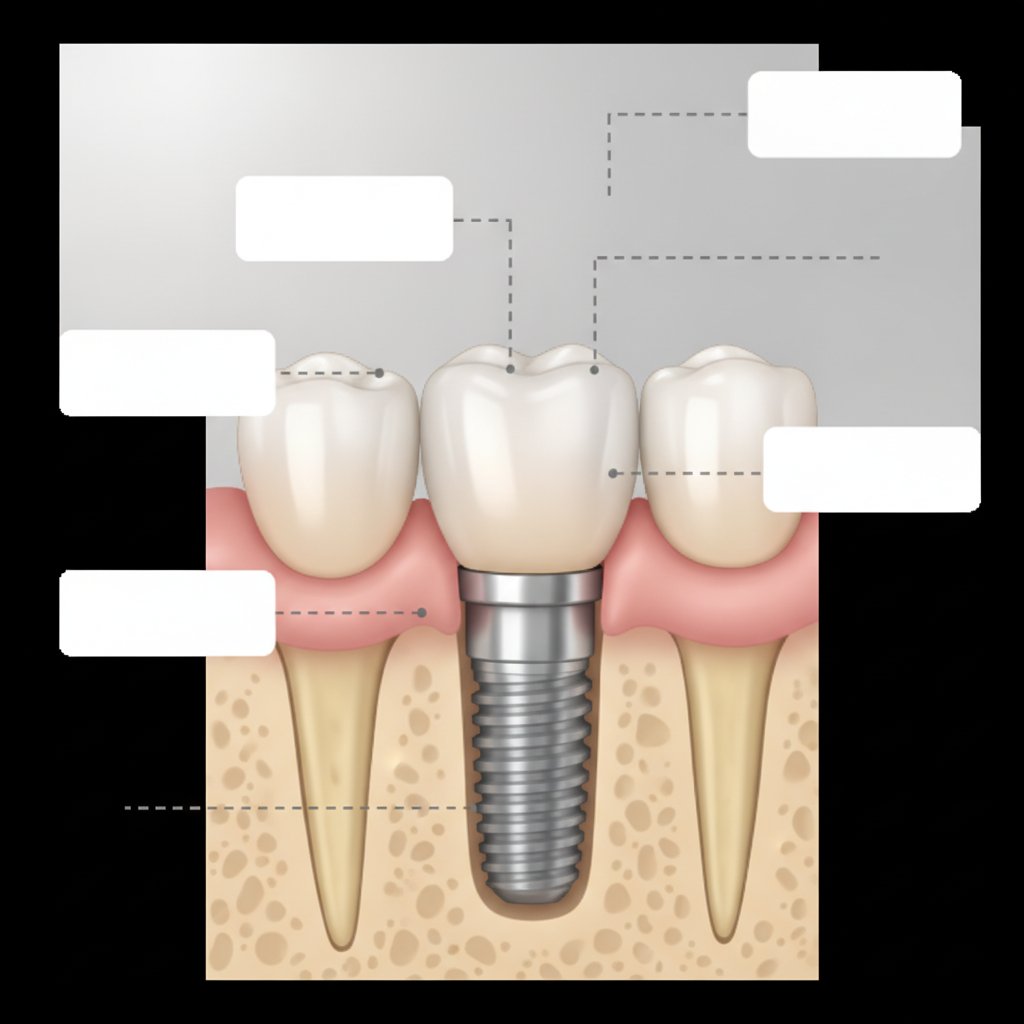
Here’s our exact checklist for the first year. After that, adjust frequency according to your risk.
- Morning brush: use a soft‑tapered brush in circular motions for 2 minutes.
- Mid‑day water‑floss: 30 seconds per side at low pressure.
- Afternoon rinse: 0.12 % cetylpyridinium mouthwash for 30 seconds.
- Evening brush: repeat the morning routine.
- Inspect: check the implant with a handheld mirror; look for plaque or discoloration.
- Weekly floss‑threader deep clean: gently slide the threader under the crown and pull plaque out.
- Monthly self‑scan: capture a photo with the Optima Dental app and compare it to your baseline.
Sticking to this 7-step routine cuts your risk of Peri‑Implantitis dramatically.
Implant Care: DIY vs Professional Supervision (Comparison Table)
| Aspect | DIY Home Care | Professional Supervision |
|---|---|---|
| Plaque removal depth | Supragingival only. | Subgingival ultrasonic cleaning. |
| Detection of bone loss | Visual inspection only. | Radiographic assessment. |
| Adjustment of occlusion | Not possible. | Precision grinding if needed. |
| Risk of Peri‑Implantitis | Higher without periodic debridement. | Lower through early biofilm removal. |
We track your implant’s condition with a 3‑D digital model at each visit — spotting bone changes as small as 0.2 mm, much more than a mirror reveals.
How Often Should I See My Dentist for Implant After‑Care in San Jose?
We suggest a check‑up every 4 months the first year, transitioning to 6 months for low-risk patients. Higher-risk cases keep a 3-month cycle.
Regular professional monitoring remains your strongest defense against Peri‑Implantitis.
Can I Use Over‑the‑Counter Mouthwash on My Implants?
Yes, but opt for alcohol‑free products to avoid drying and irritating the implant seal. Chlorhexidine is effective but should be limited to short, dentist-supervised courses since it can stain titanium over time.
Frequently Asked Questions
What is Peri‑Implantitis and why does it happen?
Peri‑Implantitis is inflammation around an implant caused by bacterial plaque breaching the soft tissue seal. Left untreated, it eats away bone and loosens the implant.
Is flossing safe around Implants?
Yes, as long as you use a floss threader or water-flosser gently. Avoid snapping the floss against the abutment.
Can diabetes increase my risk?
Poorly controlled diabetes raises blood sugar, fueling bacteria and slowing healing. Keeping HbA1c below 7% cuts risk sharply.
Do I need a special toothbrush?
Soft‑tapered implant brushes reach the crown-abutment junction without scratching titanium, unlike regular flat-head brushes that often miss this critical spot.
What should I do if I notice bleeding?
Call us immediately. We’ll arrange a diagnostic visit, take periapical X-rays, and clean non-surgically if possible.
Protect your investment. Schedule Your Implant After‑Care Appointment at Optima Dental and get a personalized plan tailored to you.
Evidence and Statistics: What the Research Shows
Risk estimates vary, but several points are consistent:
- Peri‑implant mucositis — soft tissue inflammation without bone loss — affects 30–50% (or more) of implant patients.
- Peri‑Implantitis, which involves bone loss, shows up in roughly 10–25% of patients at some point.
- Smokers face 2 to 3 times higher risk of Peri‑Implantitis and implant failure than non-smokers.
- Patients with a history of periodontitis or uncontrolled diabetes have significantly higher risk; periodontal history is one of the strongest predictors of implant complications.
These ranges reflect differences in follow-up length, implant types, and maintenance protocols. The takeaway: regular monitoring and prevention consistently lower risk.
Real‑World Case Studies from San Jose (Anonymized)
Case 1 — Early mucositis reversed with non‑surgical Care
Patient A, 54, non-smoker, had a lower molar implant placed 18 months earlier. Bleeding during flossing and mild tenderness led to examination showing redness and 2–3 mm probing depths, no bone loss on X-rays. Treatment consisted of ultrasonic cleaning with plastic tips, topical antimicrobial gel, and two weeks of supervised chlorhexidine rinse. Tissue returned to healthy pink in six weeks, bleeding stopped, and patient resumed routine 4-month maintenance.
Case 2 — Moderate Peri‑Implantitis requiring regenerative therapy
Patient B, 63, former smoker with periodontitis history, presented with pus, 6 mm probing depths, and 3 mm bone loss around a mandibular implant placed 3 years prior. Non-surgical therapy reduced inflammation but bone loss persisted. Surgical intervention included access flap, implant surface decontamination, and guided bone regeneration with graft and resorbable membrane. After one year, pocket depths shrank to 3–4 mm, bone rebounded approximately 2 mm, and patient remains on 3-month maintenance.
Case 3 — Prevention success in a medically complex patient
Patient C, 68, with Type 2 diabetes (HbA1c 6.8%) and osteopenia received two Implants and followed our high-risk maintenance program with 3-month visits. Over five years, minor mucositis episodes were managed conservatively, with no Peri‑Implantitis developing. The patient credits consistent home Care combined with regular professional cleanings.
Tools and Products We Recommend
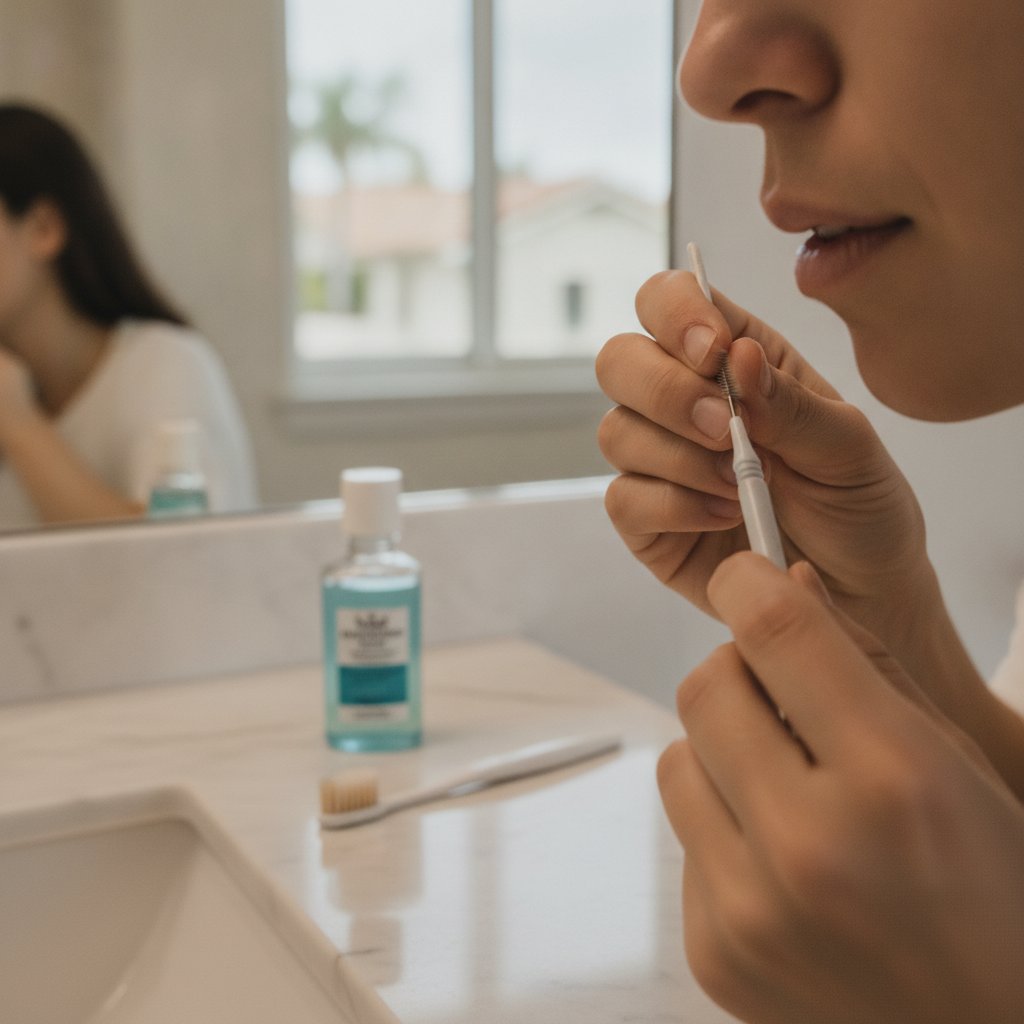
Not all oral hygiene tools are made alike. Here are our most frequent recommendations—and why:
- Soft‑tapered manual brushes reach the crown-abutment junction without scratching titanium.
- Pressure-regulated electric toothbrushes with soft heads provide consistent, thorough plaque removal.
- Small, conical interdental brushes with nylon-coated wires clean open spaces safely without damaging restorations.
- Water-flossers benefit those with limited dexterity; keep pressure at low or medium levels around Implants.
- Alcohol-free antimicrobial rinses (like 0.12% cetylpyridinium chloride) are gentle enough for daily use; reserve chlorhexidine for short, supervised courses.
- Floss threaders allow safe, gentle flossing under bridges and around abutments on fixed prostheses.
We demonstrate these products at Optima Dental so you start with the right technique.
Troubleshooting Common Issues
Manage these common concerns between visits:
- Sensitivity after cleaning: Mild sensitivity might last 1–3 days after vigorous brushing or polishing at home. Switch to desensitizing toothpaste and soft brushes. Contact us if it lasts longer.
- Loose crown: Don’t try to fix it yourself. Cover any sharp edges with wax or sugar-free gum and call us immediately. A loose crown invites bacteria and speeds Peri-Implantitis.
- Bad taste or odor: Could signal pus or trapped debris. Rinse with warm saline and avoid harsh mouthwashes. Schedule an urgent checkup.
- Discoloration at gum margin: Might be staining or plaque. A professional exam will clarify whether it needs cleaning or has a material cause.
When Surgery Becomes Necessary
Many early cases respond to non-surgical Care, but sometimes surgery is required. We recommend it when:
- Bone loss progresses despite cleaning.
- Pockets deepen beyond 5 mm with ongoing bleeding or pus.
- Implant threads become exposed and soft tissue reattachment is inadequate.
Typical surgeries include:
- Access flap with cleaning and implant surface decontamination.
- Resective surgery to remove infected tissue and reshape bone.
- Regenerative surgery involving bone grafts and membranes to rebuild bone.
- Implant removal, as a last resort when infection or mobility can’t be controlled, followed by possible reconstruction.
We tailor surgical plans based on your unique situation and discuss all outcomes and follow-up steps.
Costs, Insurance, and Value of Prevention
Costs differ by procedure and location, but here’s a general idea for San Jose:
- Routine implant maintenance visits (check-up and cleaning) typically cost similar to periodontal maintenance appointments; insurance May cover part.
- Non-surgical cleaning for mucositis involves a moderate office fee, usually less than surgery.
- Surgery with grafting runs much higher—often thousands of dollars depending on materials and complexity.
Dental insurance usually offers limited implant coverage but often supports maintenance and some surgical treatments. Preventive Care almost always costs less and minimizes recovery time and complications.
Practical Tips for Travel and Busy Schedules
- Pack a compact oral hygiene kit (soft brush, interdental brush, travel water-flosser) when you travel.
- If your trip exceeds your usual cleaning interval, book a maintenance visit before you leave.
- Set phone reminders for midday water-flossing if your schedule is hectic—short, consistent Care beats sporadic perfection.
Expanded Frequently Asked Questions
Can Implants get cavities?
No. Titanium Implants don’t decay like natural teeth. But the surrounding soft tissue can develop mucositis, and plaque can build up at crown margins, leading to inflammation and bone loss. Good hygiene protects this critical interface.
How long do Implants last?
Implants can last decades with proper placement and maintenance. Many long-term studies show 90% or higher survival rates at 10 years in healthy patients. Longevity depends on hygiene, health, smoking, and follow-up Care.
Can I whiten my Implants or surrounding teeth?
Implant crowns are ceramic or composite and don’t whiten with bleaching. If whitening natural teeth, do it before crown selection so shade matches properly. Crowns May need adjustment or replacement if tooth color changes later.
Is an electric toothbrush safe for Implants?
Absolutely. Use a soft-bristle head and avoid heavy pressure. Electric brushes are often better at plaque removal and improve outcomes for many patients.
Are probiotics or oral rinses helpful long-term?
Probiotics show some promise supporting oral microbiome health but don’t replace mechanical cleaning. Use evidence-backed, alcohol-free rinses regularly, and talk to your dentist before long-term chlorhexidine use due to possible staining and titanium effects.
What if I travel frequently for work?
Frequent travel increases missed cleanings. Schedule visits before trips when possible, or extend maintenance intervals cautiously with stricter home Care. Some patients send intraoral photos via secure apps between visits for early checks.
Do I need antibiotics after maintenance visits?
No, not routinely. Antibiotics are reserved for acute infections or specific recommendations. Overuse breeds resistance and is avoided whenever possible.
Can pregnancy affect my implant health?
Hormonal shifts during pregnancy can raise gum inflammation and bleeding. Maintain strict hygiene and keep up with cleanings. Inform us if pregnant so we adjust treatments and limit X-rays accordingly.
Key Takeaways
- Consistent, gentle mechanical cleaning plus professional debridement offers the best protection against Peri‑Implantitis.
- Recognize your risk factors: smoking, diabetes, and periodontitis history call for closer follow-up.
- Early warning signs like bleeding or bad taste demand immediate evaluation to avoid surgery.
- Preventive Care beats treating advanced disease — for your wallet and your health.
If you have an implant or are planning one, we’re here to help. Schedule Your Implant After‑Care Appointment and let’s create a personalized plan that fits your needs.