
Peri-Implantitis Prevention in San Jose: Caring for Your Dental Implants


Dental implants do not develop cavities, but the gums and bone supporting them still need ongoing care. Plaque buildup can cause inflammation around an implant and, in some cases, contribute to the loss of supporting bone.
Daily cleaning, professional maintenance, and early assessment of changes help reduce these risks. No routine can guarantee that an implant will remain problem-free for life, but consistent care is an important part of protecting your oral health.
For San Jose patients with dental implants, here is what to know about prevention, warning signs, and treatment.
Understanding Peri-Implant Mucositis and Peri-Implantitis
These conditions both involve inflammation around dental implants, but they differ in whether supporting bone has been lost.
Peri-Implant Mucositis
Peri-implant mucositis affects the soft tissue around an implant without additional bone loss beyond the changes associated with initial healing and remodeling.
Signs may include bleeding during gentle cleaning or examination, redness, and swelling. Professional cleaning and improved plaque control can often resolve the inflammation. Follow-up is needed to confirm that the tissues have responded.
Peri-Implantitis
Peri-implantitis involves inflammation together with progressive loss of supporting bone. Your dentist assesses the gums, probing measurements, and X-rays to help establish the diagnosis.
Pus or implant looseness may occur, but neither is necessary for the disease to be present. Waiting for an implant to become painful or loose can delay needed care.
Mucositis does not inevitably progress to peri-implantitis, but inflammation should be evaluated and treated.
Who May Need Closer Monitoring?
A history of periodontitis, smoking, diabetes, and difficulty maintaining plaque control can influence implant health and maintenance needs.
The restoration also matters. A crown or bridge that is difficult to clean, retained cement, or other local problems may contribute to persistent inflammation.
Tell your dental team about changes in your health, medications, smoking habits, or ability to clean around your implants. These details help guide your care.
Daily Care for Dental Implants
Brush Twice Daily
Use a soft-bristled toothbrush and fluoride toothpaste to clean your teeth and implant restorations. Pay attention to the area where the restoration meets the gumline.
Fluoride remains important for any natural teeth you have. Ask your dental team about product choices if you have exposed implant components or concerns about abrasive products.
Clean Between Teeth and Around Restorations
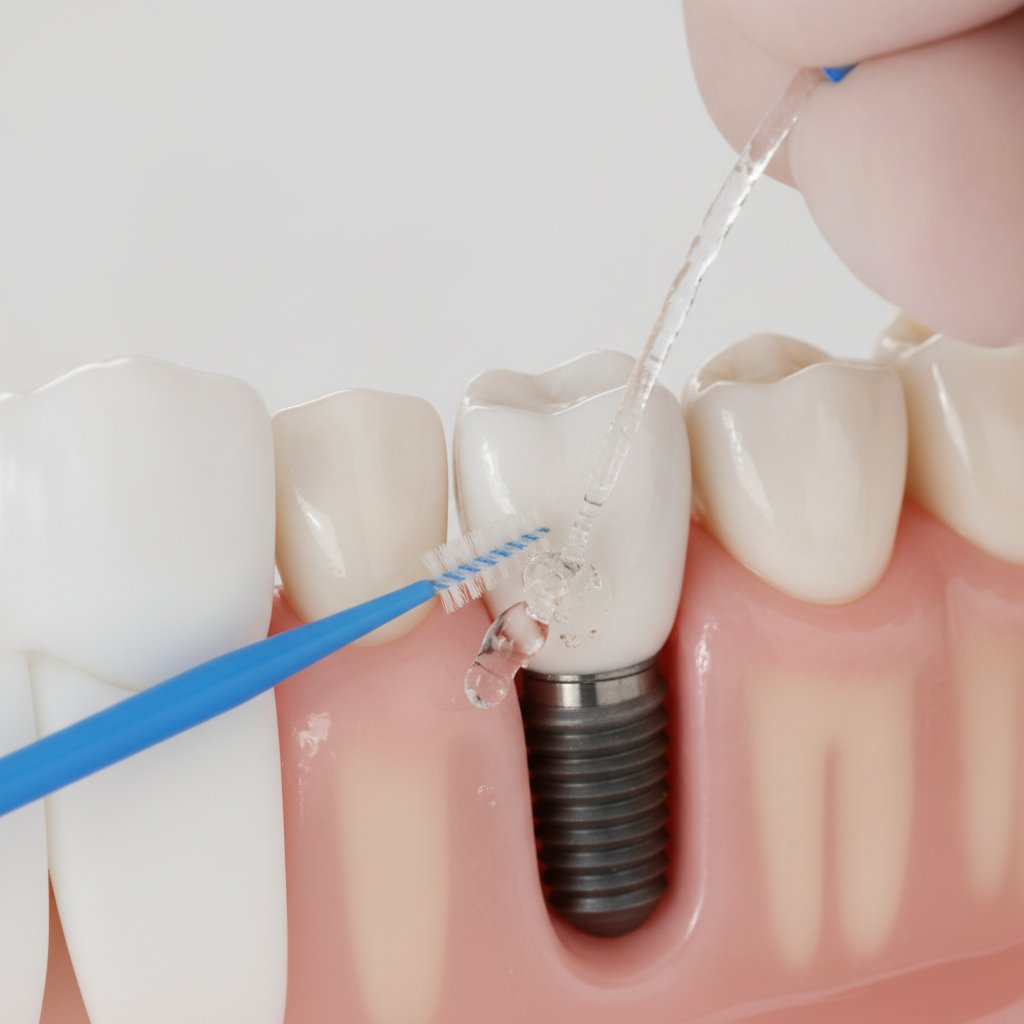
Clean between your teeth and around implant restorations every day using a method recommended for your mouth.
Depending on the available space and restoration design, this may involve floss, a floss threader, an appropriately sized interdental brush, or a water flosser. You do not necessarily need every device.
Ask for a demonstration, especially if you have an implant-supported bridge or full-arch restoration. Do not force brushes into tight spaces or push cleaning tools deeply beneath the gums.
Report Snagging or Difficult-to-Clean Areas
If floss repeatedly catches or shreds, or food regularly collects in one area, have the restoration checked. Changing to thicker floss alone may not address the cause.
Do not use sharp household objects or attempt to scrape deposits off an implant yourself.
Follow Any Additional Instructions
Use prescribed rinses or other products only as directed. Mouthwash cannot replace mechanical cleaning or treatment for an established problem.
If you smoke, ask about cessation support. If you have diabetes, keeping it appropriately managed is also relevant to your oral health.
What Happens at an Implant Maintenance Visit?
An implant checkup involves more than polishing the visible crown.
Your dental team may assess gum inflammation, bleeding, probing measurements, recession, plaque, and deposits. They also check the restoration’s condition, stability, and accessibility for cleaning.
Measurements and appropriate baseline X-rays help the team identify changes over time. There is no single pocket-depth number that determines health or disease for every implant.
Professional cleaning methods are selected according to the implant, restoration, deposits, and tissue condition.
Are 3D Scans Needed at Every Visit?
No. Routine implant maintenance does not automatically require a CBCT scan.
When imaging is needed to assess bone around an implant, standard intraoral X-rays are generally the first choice. Their timing depends on clinical findings, previous images, and your individual circumstances.
A CBCT scan may be appropriate when a specific complication or treatment-planning question requires three-dimensional information. It should not be presented as a routine requirement for every healthy implant.
How Often Should Implants Be Professionally Cleaned?

Your maintenance schedule should reflect your individual risk and clinical findings.
Some patients are reviewed approximately every six months. Others—particularly those with previous periodontal or peri-implant disease, persistent inflammation, or difficulty cleaning—may benefit from three- or four-month visits or another individualized interval.
Do not wait for your next scheduled visit if a new problem develops.
Warning Signs That Need Attention
Repeated bleeding, new swelling, persistent tenderness, pus, an unpleasant taste, or changes in the gumline should prompt a dental assessment. These symptoms do not establish a diagnosis on their own, but they should not be ignored.
Contact your dentist promptly if an implant restoration moves or feels loose. A loose crown or screw is different from movement of the implant itself, and an examination is needed to determine the cause. Avoid chewing on the affected restoration until it has been assessed.
Seek urgent dental care for worsening pain, pus, or substantial swelling. Facial swelling with fever needs urgent assessment. Difficulty breathing or swallowing requires emergency care.
How Is Peri-Implant Disease Treated?
Treatment for Mucositis
Treatment usually focuses on professional removal of plaque and deposits, improving home cleaning, and addressing contributing factors.
For example, retained cement or a restoration that prevents effective cleaning may need attention. A follow-up examination checks whether the inflammation has resolved.
Treatment for Peri-Implantitis
Treatment generally begins with nonsurgical cleaning, hygiene instruction, and management of contributing factors. The response is then reassessed.
Persistent or more advanced disease may require surgery to improve access to affected implant surfaces and manage the surrounding tissues. Bone grafting may be considered for selected defects, but it cannot guarantee replacement of all lost bone or long-term retention of the implant.
Not every implant can be saved. If an implant cannot be predictably maintained, removal may be the most appropriate option. A periodontist or another clinician experienced in peri-implant disease may be involved in care.
Lasers and other additional treatments have varying evidence and limitations. They should not be described as guaranteed methods of sterilizing an implant or regenerating bone.
Frequently Asked Questions
Does Peri-Implantitis Always Hurt?
No. Peri-implant disease can be present without pain. Regular examinations remain important even when an implant feels comfortable.
Can Peri-Implantitis Be Treated Without Surgery?
Some cases improve with nonsurgical treatment, but complete disease control is less predictable in advanced cases. The need for surgery depends on the findings and the response to initial care.
Can I Use Regular Floss?
It may be appropriate if it cleans effectively without snagging or shredding. The best method depends on the restoration. Ask your dental team to show you how to clean your specific implant crown or bridge.