
Invisalign Teens San Jose: A Parent’s Complete Guide

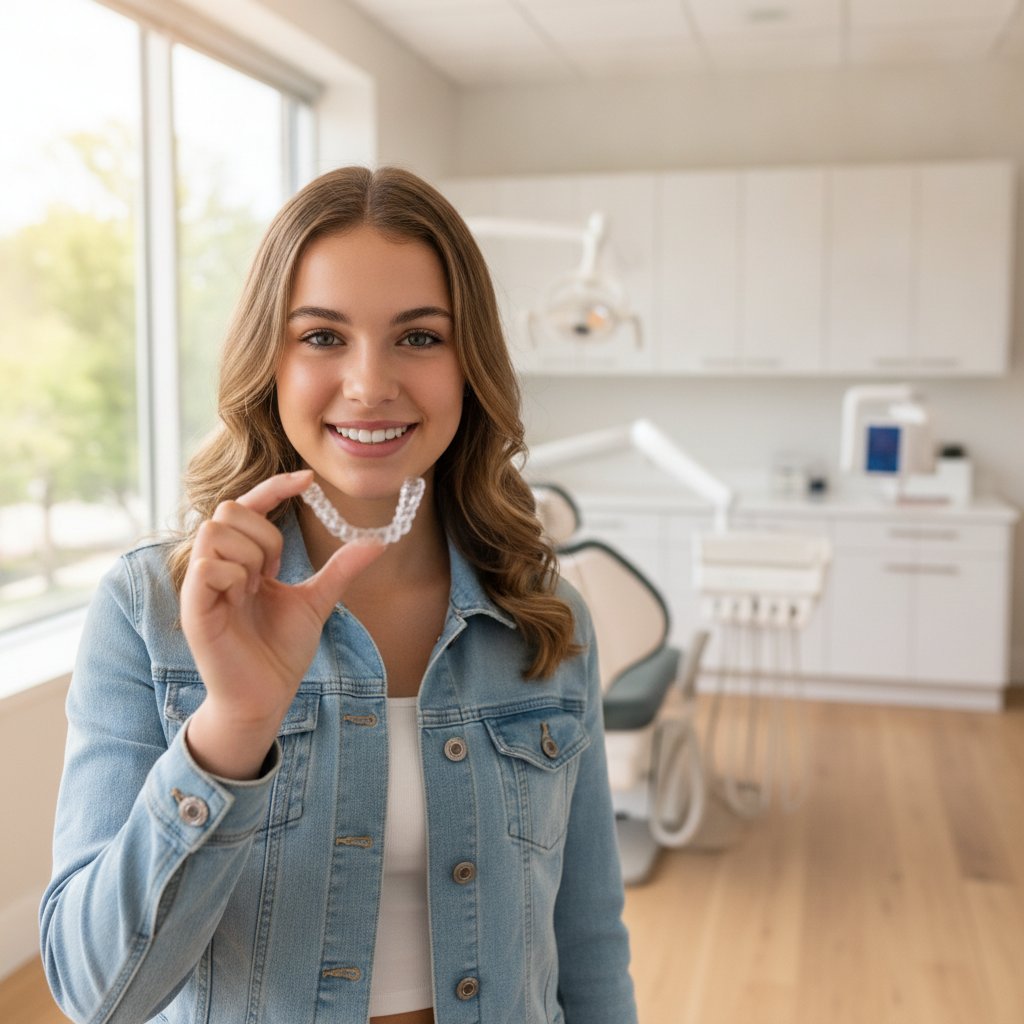
Invisalign Teens San Jose families choose gives students a discreet, comfortable way to straighten teeth without disrupting sports, band practice, or school photos. The system relies on custom clear trays that guide teeth into position gradually. Because the workflow is digital from start to finish, you spend less time sitting in waiting rooms and get a clear picture of the outcome before your child wears the first tray.
Invisalign Teens San Jose: Eligibility and What to Expect
Most teenagers between 12 and 18 qualify for clear aligners, provided their bite issues don’t require surgical correction. At Optima Dental, our team checks bone growth patterns, gum condition, and existing dental work before building a Treatment plan.
Treatment success hinges on healthy teeth and a firm commitment to wear the aligners 22 hours every single day. Severe skeletal misalignment or extreme crowding might still call for fixed brackets. During the first visit, we take digital photos and run an iTero scan to generate a precise 3D model of your teen’s mouth.
We also evaluate erupting teeth. Teens often have second molars coming in or canines shifting into position. Modern aligners account for this physical growth by leaving targeted space for incoming teeth without stalling alignment elsewhere. Any cavities must be treated before clear aligner therapy starts, giving teeth and gums a stable foundation for orthodontic movement.
Step‑by‑Step Digital Workflow at Optima Dental
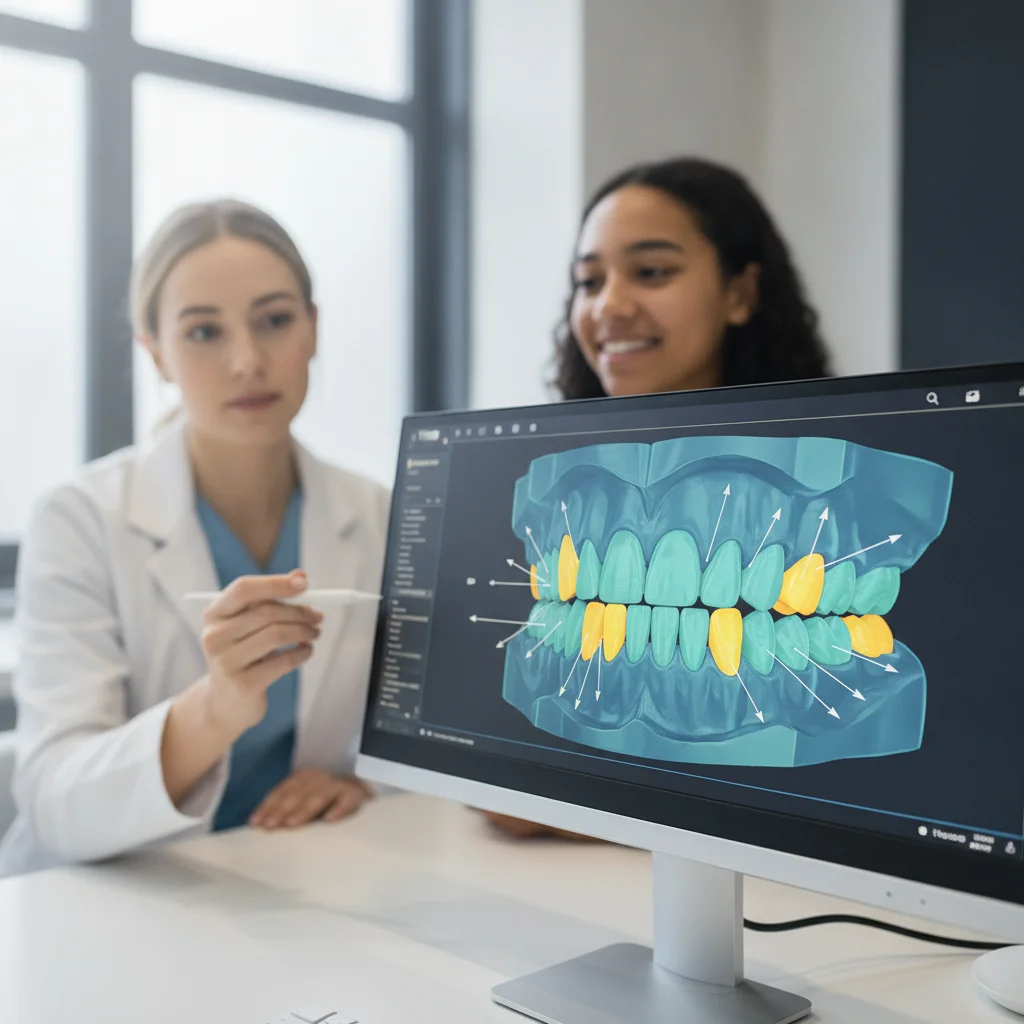
Digital planning cuts out the messy goop of putty impressions and speeds up the process.
- Initial consultation: Book an evaluation to review smile goals and explore Invisalign Treatment options at Optima Dental.
- In-office iTero scan: Our scanner maps every tooth surface within minutes to render a high-resolution 3D model.
- Virtual simulation: A certified orthodontist maps out each tooth movement stage by stage, letting you preview the finished smile on screen.
- Tray manufacturing: The dental lab produces the full sequence of custom clear trays according to the approved plan.
- First tray delivery: Your teen tries on their initial aligners, gets wearing directions, and connects with the mobile tracking app.
- Progress reviews: Short check-ins every few weeks confirm fit, assess progress, and supply the upcoming trays.
- Retention: When the final active tray finishes its job, we provide a retainer to keep the new alignment stable.
This digital approach cuts total Treatment timelines by up to 20% compared to traditional plaster impression workflows.
You can see the planned movement for every incisor, premolar, and molar before Treatment even begins. Because each tray delivers calibrated mechanical forces, the process avoids the guesswork of manual wire tightenings.
Specialized Design Features Engineered for Teen Lifestyles
Younger patients have distinct physiological and lifestyle needs compared to adults. The adolescent system includes features made specifically for school schedules and growing jaws.
Built-in compliance indicators fade from blue to clear to show whether your teen is hitting the required 22 hours of daily wear.
These small dots react to saliva over time. They give parents an objective, non-confrontational way to confirm their teen actually wears the trays as directed.
Eruption tabs also play an important role. Many 12-to-15-year-olds are still waiting on their second molars or permanent canines. These tabs preserve space and guide un-erupted teeth into the dental arch while moving surrounding teeth, so you do not need to wait until every adult tooth emerges to begin care.
How Long Does Treatment Take?
Most teen cases in the South Bay wrap up within 12 to 18 months, though the timeline tracks with mechanical difficulty.
- Minor crowding (1 to 3 mm): 6 to 9 months.
- Moderate spacing or bite issues (3 to 6 mm): 12 to 15 months.
- Complex bite corrections: 18 to 24 months, often using attachments or elastics.
Consistent daily wear remains the single biggest factor determining whether your teen finishes Treatment on time.
Small composite buttons bonded to specific teeth give the plastic extra grip for difficult rotations or vertical shifts. When complex root torque or bite leveling is required, elastics work alongside the trays. Wearing the trays for the full 22 hours lets these components do their job without dragging out the calendar.
Hypothetical Case Scenarios: How Clear Aligners Work in Practice
Reviewing realistic Treatment paths helps parents understand how clear trays manage everyday dental corrections.
Hypothetical Scenario A: Moderate Crowding and Overbite in an 8th Grader
A 13-year-old student presents with 4 mm of lower crowding, rotated canines, and a deep bite.
- Diagnostic Phase: The digital scan establishes an initial run of 28 aligners, changing trays every 14 days at first, then every 10 days once routine sets in.
- Attachments: Tooth-colored composite buttons on the premolars and canines give the trays grip to rotate the crowded teeth.
- Daily Routine: The student removes aligners for meals, brushes thoroughly, and averages 22.5 hours of wear per day.
- Outcome: The overbite improves noticeably by month 7. The primary 28 trays wrap up at month 13, followed by a 6-week refinement run of 4 trays. Total Treatment time hits 14.5 months before moving to a nighttime retainer.
Hypothetical Scenario B: High School Athlete with Spacing and Mild Crossbite
A 16-year-old sophomore plays varsity soccer and trumpet in the marching band, presenting with a 3 mm gap between the front teeth and a minor crossbite.
- Daily Integration: Brackets would scrape the inner lips during brass practice and risk cuts during soccer collisions. The smooth aligners protect oral tissue during classes and study sessions.
- Sports Safety: During soccer matches, the teen removes the aligners and inserts a standard athletic mouthguard, storing the trays safely in a hard case with water.
- Band Practice: The slim profile allows normal trumpet play without lip sores, keeping wear time above 22 hours daily.
- Outcome: The gap closes by month 8, and the crossbite clears by month 11. Treatment concludes right at 12 months with zero emergency appointments for broken hardware.
Daily Life with Invisalign: Sports, Music, and School Routine

Active Teens need orthodontic care that fits around classes, rehearsals, and athletics without constant dental emergencies.
Woodwind and brass players often struggle with metal brackets digging into their lips. Clear trays fit flush against the teeth, letting musicians practice without painful sores. If a graded solo performance demands it, students can take the trays out for 30 minutes and put them back in right after.
Removable trays allow student athletes to switch to a certified sports mouthguard during games to protect teeth and soft tissue. In sports like basketball, soccer, or martial arts, that versatility keeps Teens safe. Once the final whistle blows, your teen rinses their mouth, cleans the trays, and snaps them back in place.
Proven Compliance Strategies for Teens
Motivation can dip after the first few weeks, so setting simple habits early makes all the difference.
Establish the rule that aligners belong in the mouth or in the hard case to avoid accidental loss in school cafeterias.
A dedicated school hygiene kit helps tremendously. Pack a small pouch with an aligner case, travel toothbrush, toothpaste, and floss for their backpack. Wrapping aligners in a paper lunch napkin is the most common way trays end up in cafeteria trash cans.
Use the tracking app to your advantage. Automated reminders after lunch and at bedtime prompt Teens to log their wear time. Simple household incentives for meeting weekly wear targets build consistency fast. If an aligner ever feels loose or bent, call our office right away so we can adjust the plan before teeth fall behind schedule.
Caring for Clear Aligners: Cleaning and Oral Hygiene Best Practices
Trapping food residue or sugary liquids beneath plastic trays speeds up tooth decay and gum inflammation.
Rinse aligners under lukewarm water every time they come out of the mouth to keep dried saliva and plaque from building up.
- Avoid hot water: Boiling or hot water warps medical-grade thermoplastic, ruining the calibrated fit.
- Brush after eating: Students should brush and floss before re-inserting trays. When brushing after school lunch is impossible, a vigorous water rinse serves as a temporary fix.
- Clean gently: Brush the trays with a soft-bristled brush. Standard gritty toothpastes leave micro-scratches that turn plastic cloudy and trap odors, so stick to mild liquid soap or designated cleaning crystals.
Orthodontic Options for Teens South Bay – Invisalign vs Traditional Braces
| Feature | Invisalign (Clear Aligners) | Traditional Metal Braces |
|---|---|---|
| Aesthetics | Virtually invisible; removable for photos. | Visible metal brackets; noticeable. |
| Diet Restrictions | Remove for eating; no food limitations. | Avoid sticky or hard foods throughout Treatment. |
| Oral Hygiene | Brush & floss normally; aligners cleaned separately. | Extra brushing around brackets; higher plaque risk. |
| Treatment Length | 12‑18 months for most teen cases. | 10‑24 months, depending on severity. |
| Compliance Requirement | 22 hours/day wear; self‑managed. | Continuous; less reliance on patient diligence. |
Invisalign offers clear lifestyle advantages for self-motivated Teens, while fixed braces provide a hands-off option for patients who might lose removable trays.
You can explore every approach through the Full list of dental services offered by Optima Dental. Our orthodontic team evaluates your child’s bite to help you pick the right match for their habits and clinical needs.
Frequently Asked Questions
Common questions parents ask about clear aligners for teenagers in the South Bay.
- Is Invisalign safe for growing teeth? Yes. The FDA information on Invisalign clear aligners confirms clearance for adolescent patients when guided by a licensed provider.
- How often must my teen visit the dentist? Most Teens come in every 4 to 6 weeks for a 15-minute check and to pick up their next batches of trays.
- What if my teen forgets to wear the aligners? Wear-tracking apps log lost hours. Missing time stalls movement and can extend the total Treatment timeline by several weeks.
- Can my teen play sports with Invisalign? Yes. Teens can remove aligners for competition and replace them with a mouthguard.
- Does insurance cover Invisalign for Teens? Many dental plans include orthodontic benefits that cover clear aligners just like conventional braces. Our administrative team helps verify your coverage.
- What should my teen do if an aligner tray is lost or broken? Call our office immediately. We will advise whether to slip back into the previous tray or move up to the next set.
- Does wearing clear aligners cause speech issues or a lisp? A slight lisp can occur during the first day or two. Reading aloud for 15 minutes helps the tongue adapt to the plastic quickly.
- Can Teens drink beverages while wearing the aligners? Stick to plain water while trays are in place. Sodas, juices, and sports drinks seep inside the plastic and bathe enamel in acid and sugar.
- What are the attachments and will they be noticeable? Attachments are tiny, tooth-colored bumps bonded to enamel. They match the tooth shade closely and give the trays mechanical leverage.
- What happens once the active alignment phase finishes? Every patient needs retainers to stabilize the teeth and surrounding bone, starting with full-time wear before moving to nights only.
Schedule a teen Invisalign consultation today to review your child’s bite and see their digital smile preview in person.