
Same Day Crowns San Jose: In‑Office Milling at Optima Dental

Same Day Crowns San Jose: In‑Office Milling at Optima Dental
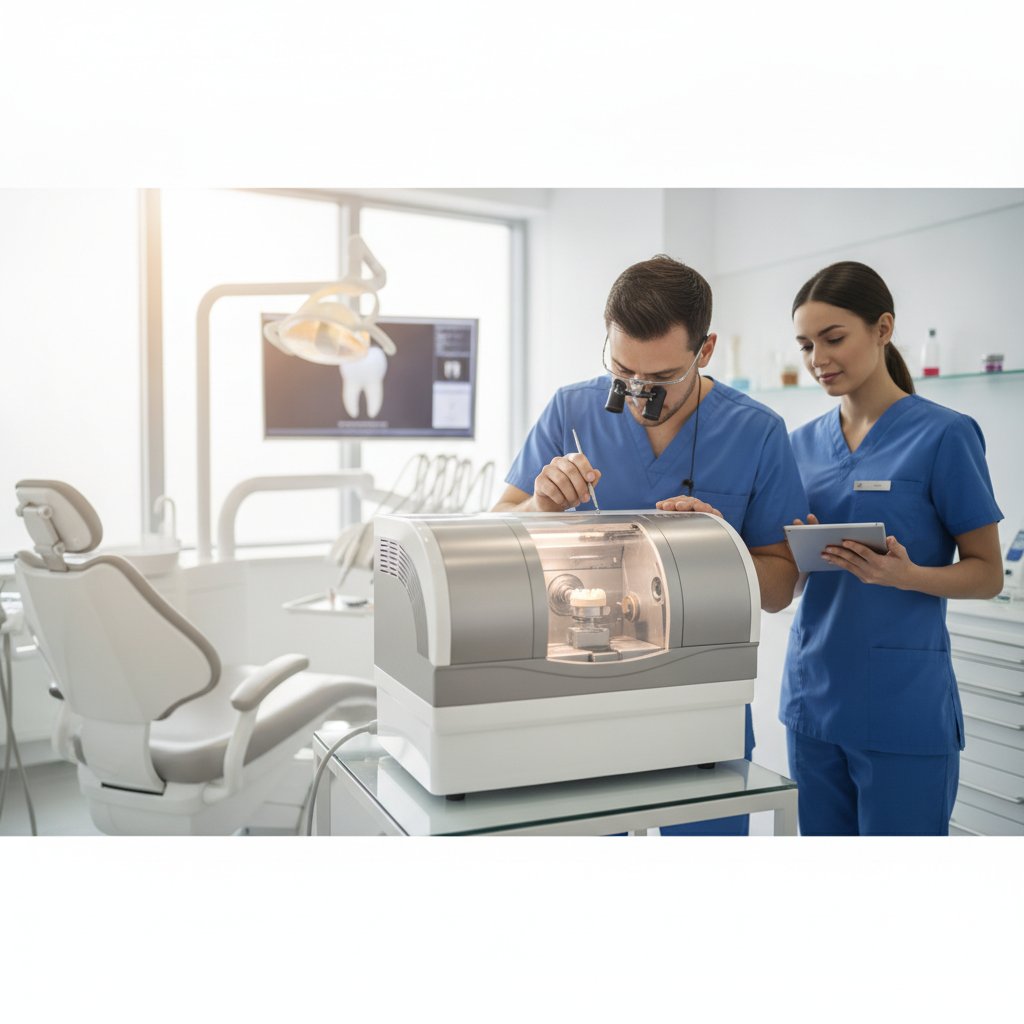
Same Day Crowns San Jose are something we do every week at Optima Dental: fast intraoral scanning, clinical design, and on‑site Milling combine so You leave with a seated crown the Same Day instead of returning a week or two later. The workflow cuts out lab turnaround and the extra delivery visit, and patients go back to their Day with a finished restoration.
Why waiting weeks for a crown still frustrates patients
Someone breaks a tooth on Monday, gets a temporary the next Day, then waits for a lab to deliver the permanent crown. Two appointments. Disrupted schedules. A temporary that can fail at the worst moment. We see that sequence enough to know it’s avoidable for many single‑unit cases.
At Optima Dental we handle the whole process under one roof so You only visit once for a final crown.
Patient story: one morning, one crown, back to life
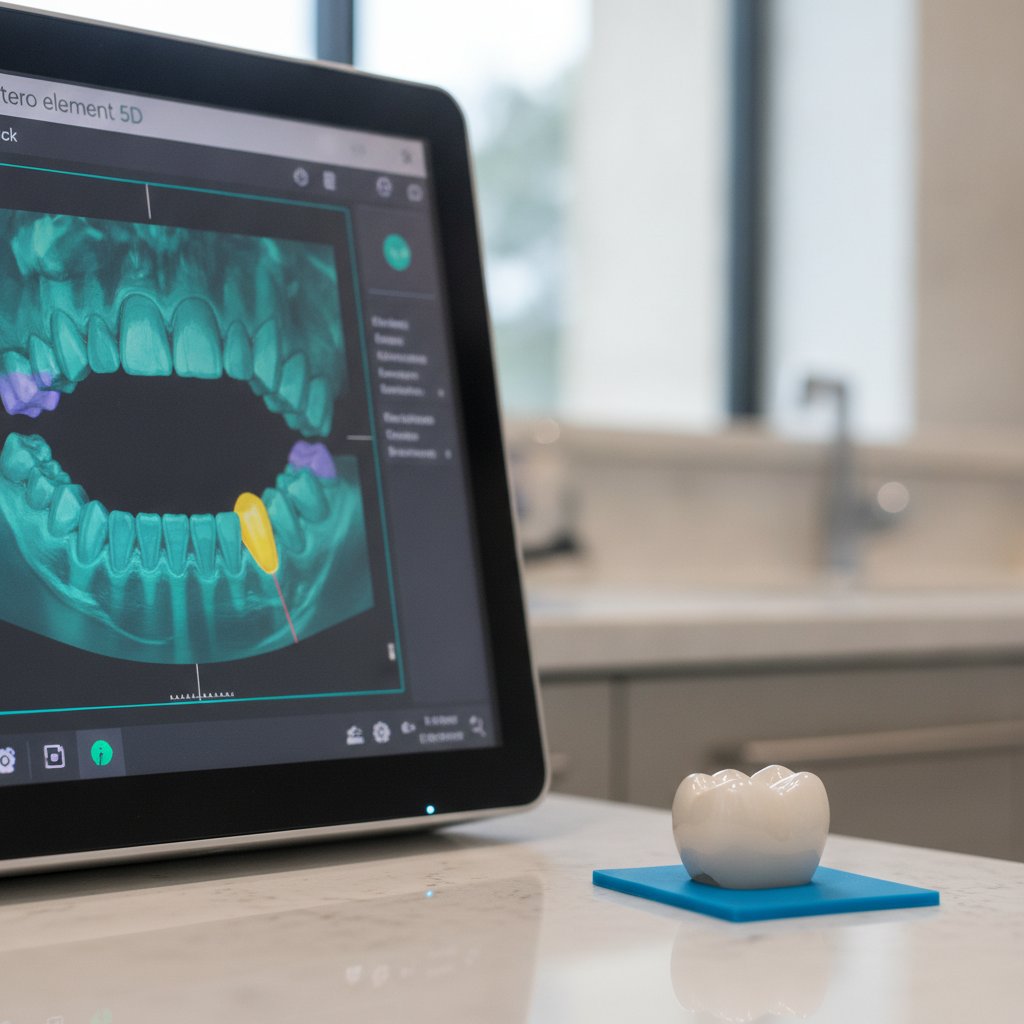
A patient arrived after an occlusal fracture during a meal. We numbed the area, prepped the tooth, scanned it, designed the restoration in the operatory and milled it on site. The visit was 2.5 hours from check‑in to finish. No separate appointment, no missed workdays; they walked out with a permanent crown.
Same‑Day Crowns at our San Jose clinic turn what used to be a two‑visit process into one focused appointment.
How Same Day Crowns San Jose work at Optima Dental
We combine a high‑accuracy digital scanner, chairside CAD software, and an on‑site Milling machine so we can fabricate and seat a crown during a single appointment. The scan, CAD, and Milling all happen while You wait, so the clinician reviews and adjusts in real Time instead of waiting for lab feedback.
We control the full chain — from scan to mill — so adjustments happen immediately, not after a week.
Core components we use in the operatory
- Intraoral digital scanner for a full‑arch or focused preparation scan.
- Chairside CAD design software that lets a clinician shape occlusion and contacts in real Time.
- An on‑site Milling machine that mills from ceramic or hybrid blocks.
- Finishing and polishing stations to stain, glaze or polish the restoration before seating.
How does in‑Office Milling cut chair Time?
It removes the laboratory turnaround and the separate delivery visit, replacing those delays with one continuous clinic workflow. That single change shortens total patient Time and reduces the risk that a temporary will fail between appointments.
Instead of two appointments and a week of waiting, You get one appointment and a finished crown before You leave.
Step‑by‑step clinic workflow (timed and actionable)
Below is the exact in‑operatory sequence we run at Optima Dental. Times reflect typical single posterior or anterior Crowns; complex full‑contour cases take longer and implants follow a similar pattern with extra abutment checks.
- Preparation and provisional (15–25 minutes): Local anesthesia, tooth prep, and a quick provisional when needed. We keep margins clean for scanning. Decision rule: if margins are subgingival >1.5 mm, we perform minor tissue retraction before scanning.
- Digital scan (2–5 minutes): Focused prep scan plus opposing and bite registration. We re‑scan immediately if margin detail is missing. Acceptance threshold: clear margin visibility in the scan file without interpolation artifacts.
- CAD design (8–15 minutes): Clinician shapes contours, adjusts contacts, and refines occlusion. Decision criteria: occlusal clearance >0.5 mm and contact tightness graded light to moderate by the software’s interference analysis.
- Milling (12–30 minutes): Time varies by material and complexity. We allow 12–15 minutes for standard composite‑ceramic blocks, and up to 25–30 minutes for denser, full‑contour ceramics.
- Finishing and glaze/polish (8–20 minutes): Stain, glaze and fire if required, or hand‑polish hybrid blocks. Short firings are scheduled into the operatory timeline.
- Try‑in and adjustments (5–12 minutes): Fit check, minimal occlusal refinement, and surface finish corrections.
- Cementation and post‑op review (10–15 minutes): Adhesive protocol or conventional cement depending on material. We verify contacts, margins, and occlusion before release.
Typical total chair Time ranges from 55 to 120 minutes for a single crown, depending on material and complexity.
Will my Same‑Day crown be as precise as a lab crown?
When we control the workflow end to end and the clinician manages scanning and design, yes. Clean margin capture is the deciding factor. With high‑quality intraoral scans and immediate design control, in‑Office Crowns match lab Crowns for fit and occlusion in most single‑unit cases.
Quality depends on clinician technique; good scanning and conservative prep practices give results comparable to traditional lab work.
For context on CAD/CAM in dentistry, You can review the ADA guide to CAD/CAM dentistry and the Wikipedia article on CAD/CAM for the underlying technology background.
Design trade‑offs we manage in practice
Digital workflows force choices between speed and material properties. Fast‑Milling, highly polishable blocks shorten appointment Time but May wear faster. Denser ceramics resist fracture and require longer Milling and occasional firing.
At Optima Dental we match material to the tooth: esthetic ceramics for front teeth, high‑strength ceramics for posterior occlusion, and hybrid blocks when minimal Milling Time is essential.
Comparison: in‑Office Milling versus traditional lab workflow
Below is a straightforward comparison. We don’t list price because fees vary by case. The chart focuses on visits, turnaround, control, and typical times.
| Feature | In‑Office Milling (Optima Dental) | Traditional Lab Workflow |
|---|---|---|
| Number of visits | 1 (prep, scan, mill, seat) | 2 visits (prep + delivery) |
| Total turnaround | Same Day (within hours) | Usually 1–2 weeks (lab dependent) |
| Clinical control | Immediate adjustments possible | Relies on lab communication and remakes |
| Material options | Wide selection; choice May affect Time | Wide selection; lab finishes and esthetics May differ |
| Risk of temporary failure | Lower — final crown placed Same Day | Higher — temporaries can fail while waiting |
In short: in‑Office Milling reduces visits and lab dependence while preserving material options and clinical control.
What trade‑offs should patients understand?
We recommend in‑Office Crowns for single‑unit restorations and many implant Crowns. For complex full‑mouth cosmetic cases or multi‑unit bridges that need lab layering and characterizations, a lab remains the better choice.
We recommend the in‑Office route when speed and single‑visit convenience are the priority and when a single unit or limited esthetic characterizations are required.
Exact technician‑style checklist our team follows (for clinical reproducibility)
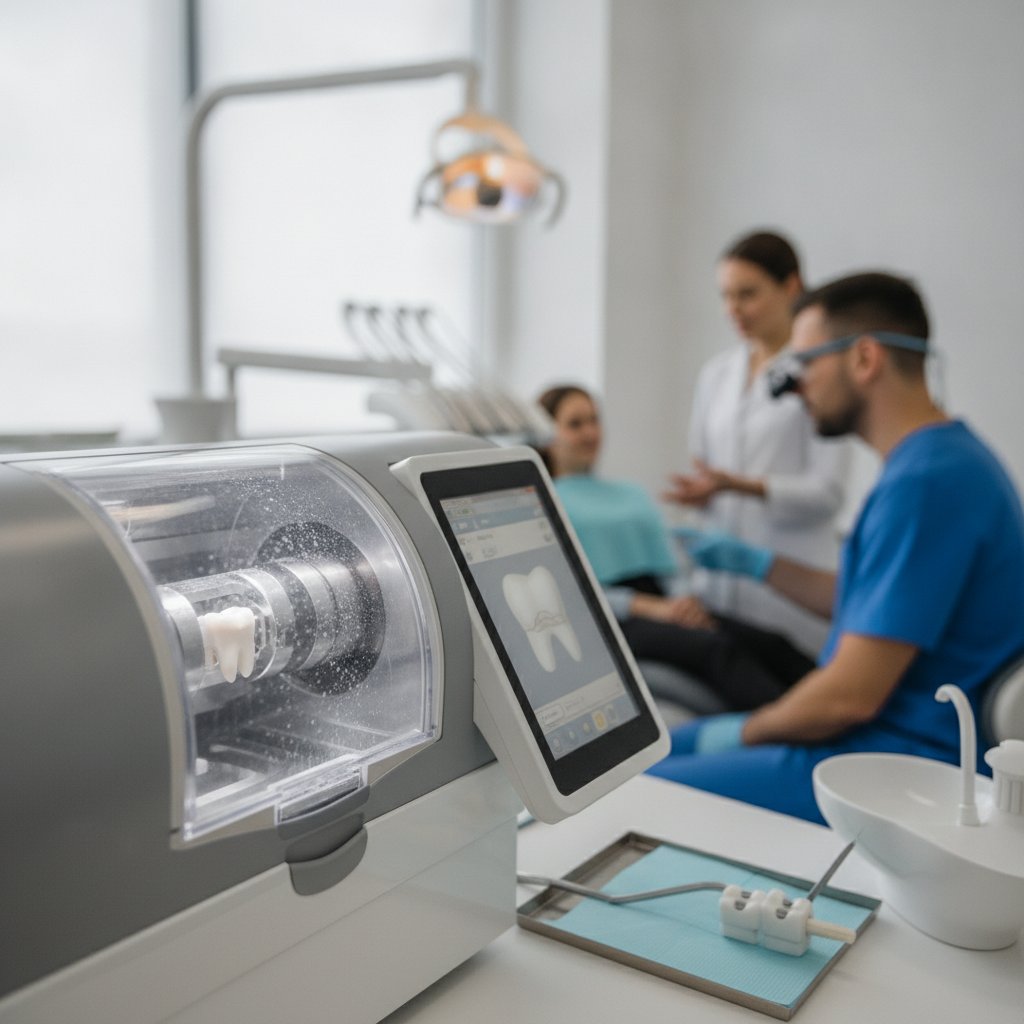
We documented these steps so any trained team member can reproduce our quality. The checklist lists acceptance thresholds and go/no‑go decisions.
- Prep margin visibility: ensure preparation margin is visible all around on the scan file. If >30% of the margin is obscured, perform retraction and re‑scan.
- Scan quality: acceptance requires no visible interpolation at margin lines and at least two scan passes for verification.
- Design contacts: target light to medium contact as measured by the software’s collision map. If heavy contact is flagged, reduce occlusal thickness in the CAD model and re‑run interference analysis.
- Milling verification: confirm toolpath simulation completes without warnings before Milling. Abort if warnings indicate tool wear or path interruption.
- Try‑in acceptance: if occlusal adjustment exceeds three sites requiring >0.5 mm reduction each, remake the restoration after adjusting the digital design.
- Final cementation: verify marginal fit and interproximal contacts; if marginal gaps visible to the naked eye, do not cement—remake.
These thresholds let us standardize quality and decide when to finish or when to remake a restoration.
Short video walkthrough (clinic footage)
Video placeholder: A short, clinician‑narrated tour demonstrating the scan, CAD design, and Milling steps will appear here on the clinic page. The video runs about 6–8 minutes and follows a single posterior crown from prep to final cementation.
For procedural details and patient preparation instructions, see our Same‑Day Crown Procedure.
When You watch the video, You’ll see the real patient flow and how we limit total chair Time to one visit.
Patient Time savings: specific, practical numbers
Most traditional lab Crowns mean two clinical visits and a lab turnaround of one to two weeks. Our in‑Office process replaces those two visits with a single appointment. That typically Saves patients at least one return trip and shaves 7–14 days of waiting when You factor scheduling and common lab delays.
Practically speaking, You save at least one appointment and the usual 7–14 Day lab turnaround.
How we decide material choice during the consultation
We make material choices case by case. Our decision tree is simple and clinician‑driven:
- If the case is anterior and esthetics dominate, choose a high‑translucency ceramic and allow for stain/glaze finishing.
- If the case is posterior with heavy occlusion, choose a higher‑strength ceramic or reinforced hybrid block.
- If the case requires ultra‑fast turnaround and minor occlusal load, select a polishable hybrid block to shorten mill and finishing Time.
Material choices balance esthetics, strength, and Time; we explain trade‑offs during the consultation.
Internal and external references
We maintain a services summary for patients: see our Dental Services Overview for related treatments and options. For background on the technology we use, read the ADA guide to CAD/CAM dentistry and the Wikipedia article on CAD/CAM describing the core CAD/CAM process behind digital dentistry.
We pair accessible patient information with authoritative references so You understand both the clinical steps and the underlying technology.
Before your Same‑Day crown visit: prep and expectations
Arrive on Time and plan for a focused appointment lasting roughly an hour to two hours. Bring your medical history and a medication list. Tell us if You grind or clench; that changes material and occlusal choices and sometimes means we recommend an occlusal guard.
Clear communication before the visit shortens the appointment and improves the final fit on the first try.
Frequently Asked Questions
How durable are Same‑Day Crowns?
Same‑Day Crowns use the Same families of materials as lab Crowns. When we choose the appropriate material for the tooth and occlusion, durability is comparable. Regular hygiene and checkups maintain long‑term performance.
Can You do a Same‑Day crown on an implant?
Yes, often. Implant Crowns need extra abutment verification and torque checks. We complete many single‑unit implant Crowns in one visit when the implant and abutment are stable.
Is the fit as accurate as a lab crown?
With high‑quality scans and careful design controls, fit is comparable. The main limitation is capturing margins cleanly during the scan, which is why we emphasize margin visibility and retraction when necessary.
Will my insurance cover a Same‑Day crown?
Coverage depends on your plan. We submit claims the Same way for Same‑Day and lab Crowns. Call our Office to verify benefits and estimate patient responsibility before treatment.
Do Same‑Day Crowns cost more?
Cost varies by material and complexity. Some cases are cost‑neutral; others run slightly higher because of chairside equipment use. We provide a clear estimate during the consultation.
Ready to schedule a Same‑Day crown consultation?
If You want a permanent crown in a single visit in San Jose, schedule with Optima Dental. We’ll review your options, choose the best material, and explain the appointment timeline.
Schedule your Same‑Day crown consultation now and get a clear, single‑visit plan tailored to your needs.
Learn more about our patient process and what to expect on our Same‑Day Crown Procedure page.