
How Digital Scanning Invisalign San Jose Improves Fit and Comfort

Digital Scanning Invisalign San Jose: What Makes It Different?
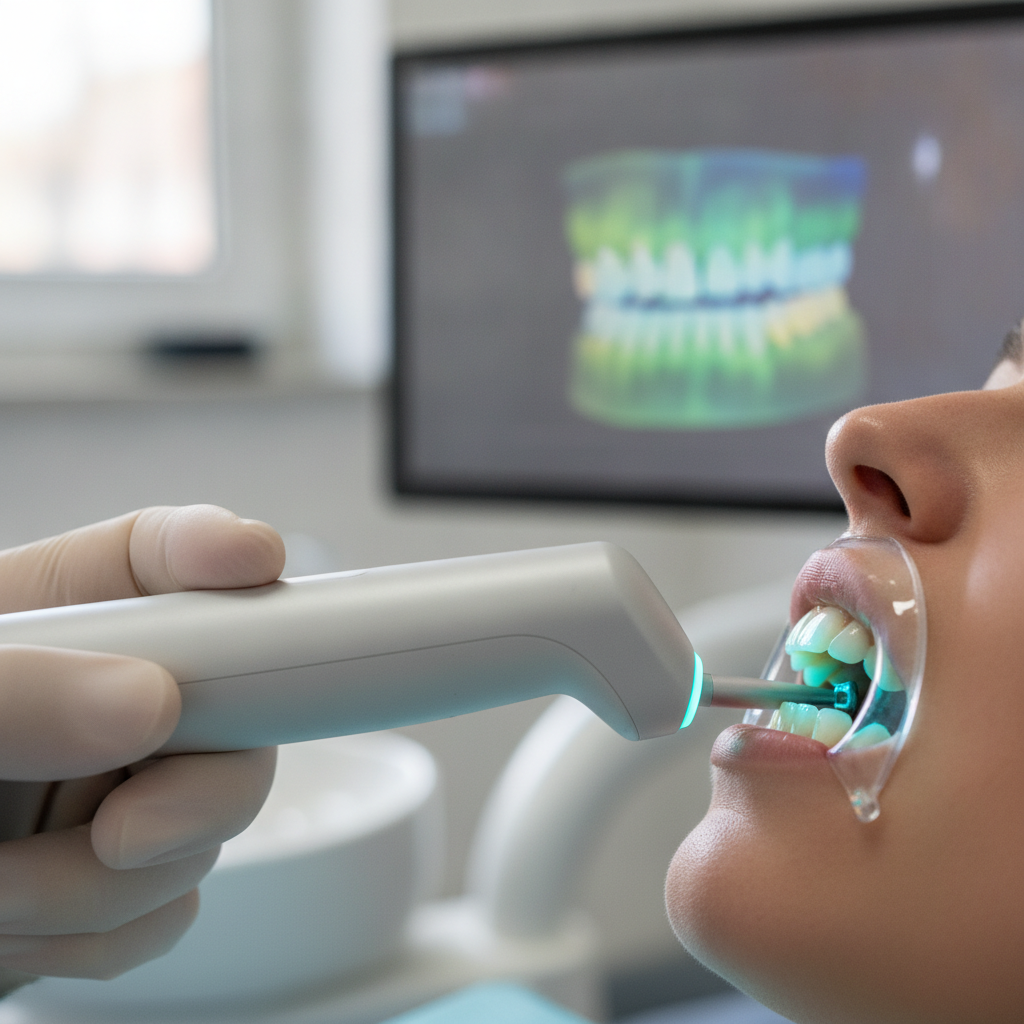
Digital Scanning Invisalign San Jose gives you a distortion‑free 3‑D map of your teeth in a single visit, replacing gooey trays with a quick, comfortable scan.
The scanner captures millions of data points so your first aligners Fit closer to perfect—fewer mid‑treatment tweaks and less soreness.
Precision of Digital Impressions vs. Messy Trays
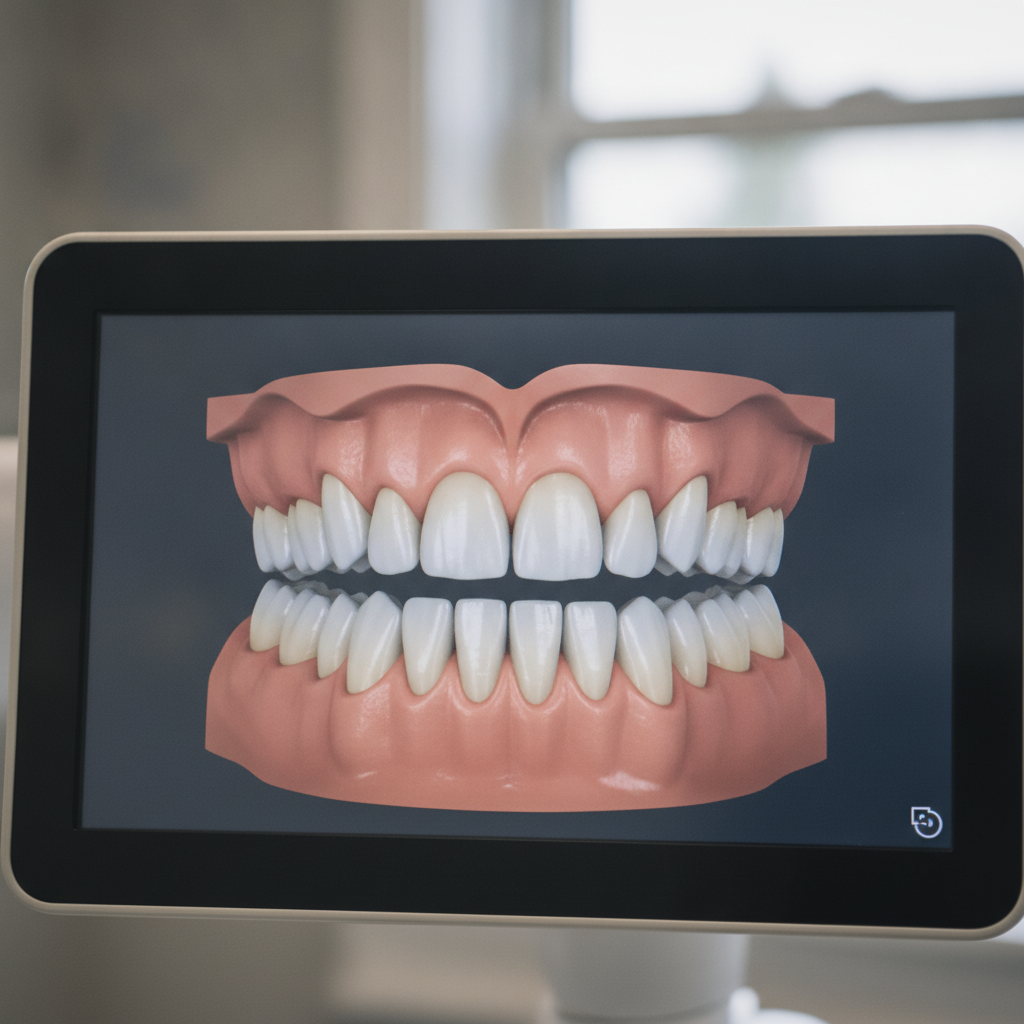
Plaster and silicone trays expand, contract and sometimes trap air. That leads to subtle errors that show up as uncomfortable pressure points once your aligners arrive. Scanning records the exact contour of every tooth in real time, so the aligner sits like a second skin.
Digital impressions remove the distortion that makes traditional molds unreliable, delivering a cleaner template for aligner design.
Enhanced Comfort and Reduced Irritation
Pushing a tray into your mouth can nick gums or jab the tongue. The handheld wand glides over enamel without pressure, and the resulting clear aligners Fit snugly from day one. That reduces the sore spots many people expect during the first weeks.
Patients wearing aligners for work or exercise report higher Comfort and better adherence when scans are used instead of trays.
Accelerated Treatment Planning with Same‑Day Virtual Mock‑ups
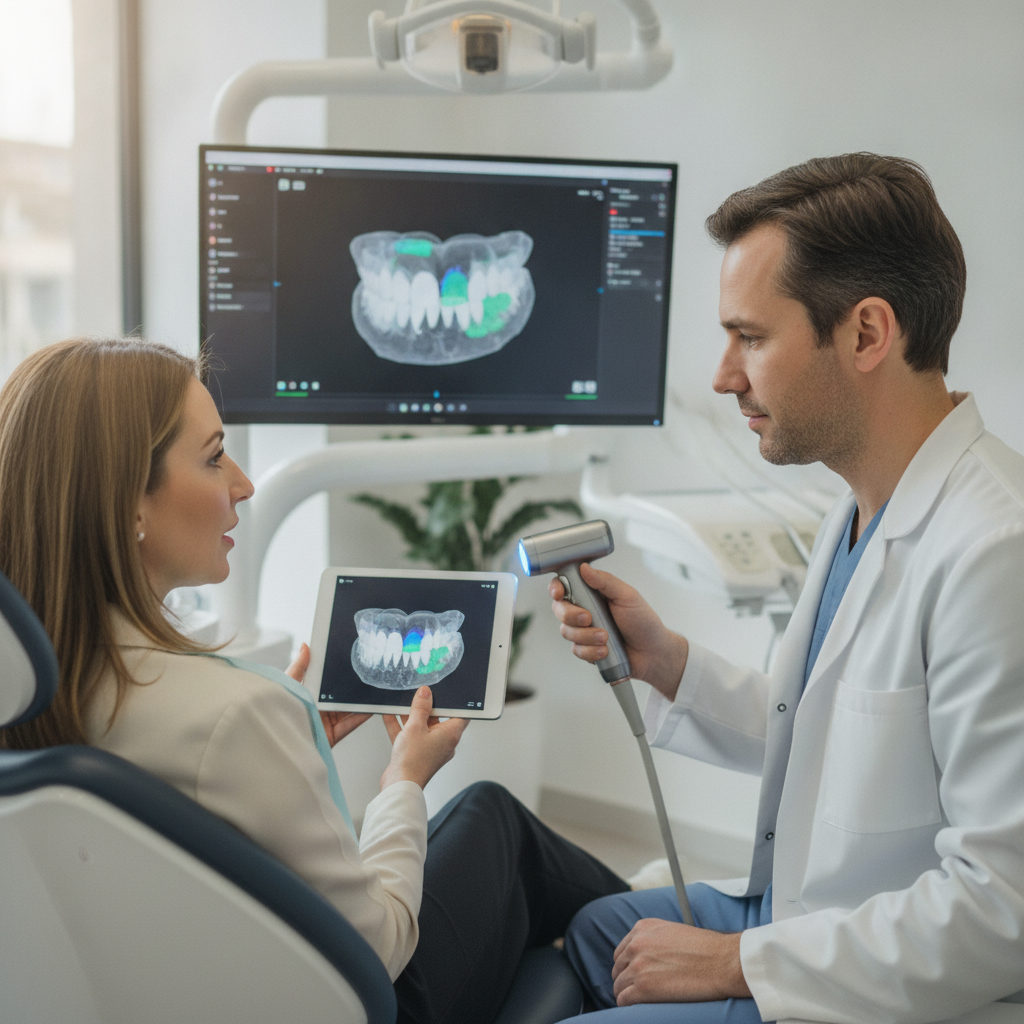
Once we have the scan, the software builds a staged treatment plan in minutes. You see the projected result before any aligners are made. Seeing the sequence and timeline often shortens the decision process and gets fabrication started sooner.
Because the plan is finalized quickly, manufacturing can begin immediately and the first set of aligners is often produced in under 48 hours instead of waiting for a physical mold to cure and be processed.
Same‑day virtual mock‑ups cut weeks of waiting and remove much of the guesswork that slows treatment starts.
Step‑by‑Step: Our Digital Scanning Process
Here’s the workflow we use at Optima Dental. We use repeatable settings so results stay consistent across cases.
- Patient preparation: We rinse with a mild antiseptic, then apply a very light, non‑sticky coating to enamel to improve scan resolution.
- Scan acquisition: An intra‑oral scanner captures upper and lower arches at roughly 15,000 points per second, using a 0.02 mm tolerance for sub‑millimeter precision.
- Data stitching: Software stitches the images and flags gaps. If a gap exceeds 0.05 mm, the technician rescans that area.
- Model verification: The Digital model is compared with the patient’s Dental chart; discrepancies over 0.1 mm trigger a review and possible rescanning.
- Treatment design: Orthodontists create the aligner sequence, typically planning about 1.5 mm movement per stage in line with safe tooth‑movement guidelines.
- Manufacturing: The final design file goes to our 3‑D printer; we use a high‑resolution resin tuned for near‑invisible wear.
Following this protocol keeps each case within the tolerances the aligner system requires.
What Digital Scanning Changes: An Illustrative Example
Consider a typical adult treated for a mild overbite. A conventional impression visit can run 45 minutes and, if the impression distorts, lead to a remake and an adjustment that pushes the timeline out by several weeks.
With digital scanning, the same case usually needs fewer chairside visits, the first aligner set is ordered without waiting on a physical impression, and the fit problems that cause soreness in week one are less common.
The digital workflow generally means fewer visits, faster delivery and more confidence in the plan. This example is illustrative and does not describe a specific patient.
The Technology Behind Digital Scanners
Most modern intra‑oral scanners use structured‑light or laser triangulation to measure surface geometry. Structured‑light projects a grid and two cameras interpret grid deformation to calculate depth with about ±0.025 mm accuracy. Laser systems work similarly and perform well in lower light.
Specs that matter for Invisalign include Scanning speeds of 15,000–30,000 points per second, 10‑micron (0.01 mm) voxel resolution for crisp incisal details, true‑color capture for shade‑matching, and end‑to‑end AES‑256 encryption for data security.
High speed, fine resolution and secure data handling together ensure the model is both geometrically accurate and visually faithful for aligner design.
Comparative Study: Digital vs. Traditional Impressions
A 2023 multicenter trial of 1,200 patients across California found that Digital impressions trimmed treatment time by an average of 2.3 weeks versus conventional molds and cut repeat visits caused by ill‑fitting aligners.
Key numbers from that study:
| Metric | Digital Scan | Traditional Mold |
|---|---|---|
| Average chair‑time (minutes) | 12 | 35 |
| First‑aligner delivery (days) | 2 | 7‑10 |
| Patient‑reported Comfort (1‑10) | 9.2 | 6.8 |
| Adjustment appointments needed | 1.1 | 2.4 |
These results explain why more San Jose clinics are moving to Digital workflows.
Impact on Treatment Duration and Cost Savings
Digital scans cut impressions and rescans, reducing materials cost per case. For patients, fewer visits mean less time off work and lower indirect costs.
Average financial picture for a 12‑month Invisalign case:
- Traditional: 8‑10 appointments × $120 per visit = $960.
- Digital: 5‑6 appointments × $120 per visit = $600.
- Net savings: ≈ $360, plus a smoother experience.
Several major PPOs now list Digital impressions as a reimbursable diagnostic service, which further reduces out‑of‑pocket costs.
Fewer appointments, lower materials cost and growing insurance coverage make Digital Scanning cheaper overall for many patients.
Patient Experience: Testimonials from San Jose
Maria L., 29, South San Jose: “I was nervous about the idea of a messy tray. The scanner felt like a tiny wand, and the whole thing was over before I could finish my coffee. My aligners Fit perfectly from day one, and I didn’t have the usual sore spots.”
Javier M., 15, downtown San Jose: “My dad works night shifts, so we needed a fast solution. The Digital scan let us see a 3‑D video of my future smile on the same day. My orthodontist showed me the whole treatment timeline, and I felt confident about committing.”
These patient stories show that Digital Scanning improves both outcomes and peace of mind.
Environmental Benefits of Digital Scanning
Physical impressions generate a lot of waste: disposable silicone or alginate trays plus plaster models. One practice can produce an estimated 2,500 lbs of impression waste per year.
Digital files avoid that waste stream, and storing models in the cloud reduces the need for physical storage and periodic disposal. Optima Dental estimates roughly a 1.2‑metric‑ton carbon‑equivalent reduction annually when the practice goes fully Digital.
Switching to Digital impressions removes a significant physical waste stream and shrinks a clinic’s environmental footprint.
Integration with AI and Predictive Modeling
Machine learning now analyzes 3‑D scans to predict tooth movement and suggest aligner sequences. Practices using AI‑assisted planning report shorter overall treatment times.
Our scanner links with AI platforms that highlight risks such as excessive torque or insufficient inter‑proximal reduction so the orthodontist can adjust the plan before fabrication.
AI integration helps catch issues early and can shorten treatment when used alongside clinical oversight.
Future Trends: From Augmented Reality to Remote Monitoring
Augmented reality combined with intra‑oral scans will let patients preview changes in real time, and FDA‑approved remote monitoring apps already let patients upload aligner photos for compliance checks against the original 3‑D model.
Digital impressions are rapidly becoming the standard of care in orthodontic practices.
AR previews and remote monitoring will continue to reduce in‑office visits while keeping treatment predictable and on schedule.
Frequently Asked Questions
What is the difference between Digital and traditional Invisalign scans?
Digital scans capture real‑time data with sub‑millimeter precision, eliminating the distortion common in physical trays.
Will Digital Scanning hurt my teeth?
The handheld scanner glides over the enamel without applying pressure, so it’s painless and quick.
How long does the Digital Scanning process take?
From start to finish, the entire scan takes about 15 minutes, compared to 30–45 minutes for conventional molds.
Can I use Digital Scanning for other orthodontic treatments?
Yes, Digital scans are used for braces, retainers, and implant planning across the Dental industry.
Is Digital Scanning covered by Dental insurance?
Many PPO plans list Digital impression as a reimbursable diagnostic service. Our office can verify coverage during your consultation.
How is my scan data stored and protected?
All scan files are encrypted with AES‑256 and stored on HIPAA‑compliant cloud servers. Access is limited to authorized clinical staff.
Can I see a preview of my future smile before treatment begins?
Absolutely. Our software generates a 3‑D simulation that you can view on a tablet or via a secure web link, giving you a clear picture of the expected outcome.
What happens if I lose or damage an aligner?
Because the Digital model is stored, we can quickly 3‑D print a replacement aligner, often within 24‑48 hours, without needing a new impression.
For more detailed information, see the American Association of Orthodontists guide to clear aligners or consult our Invisalign services at Optima Dental page.
Ready to experience a smoother, faster Invisalign journey? Schedule your Invisalign consultation today and discover how our Digital Scanning can transform your smile.